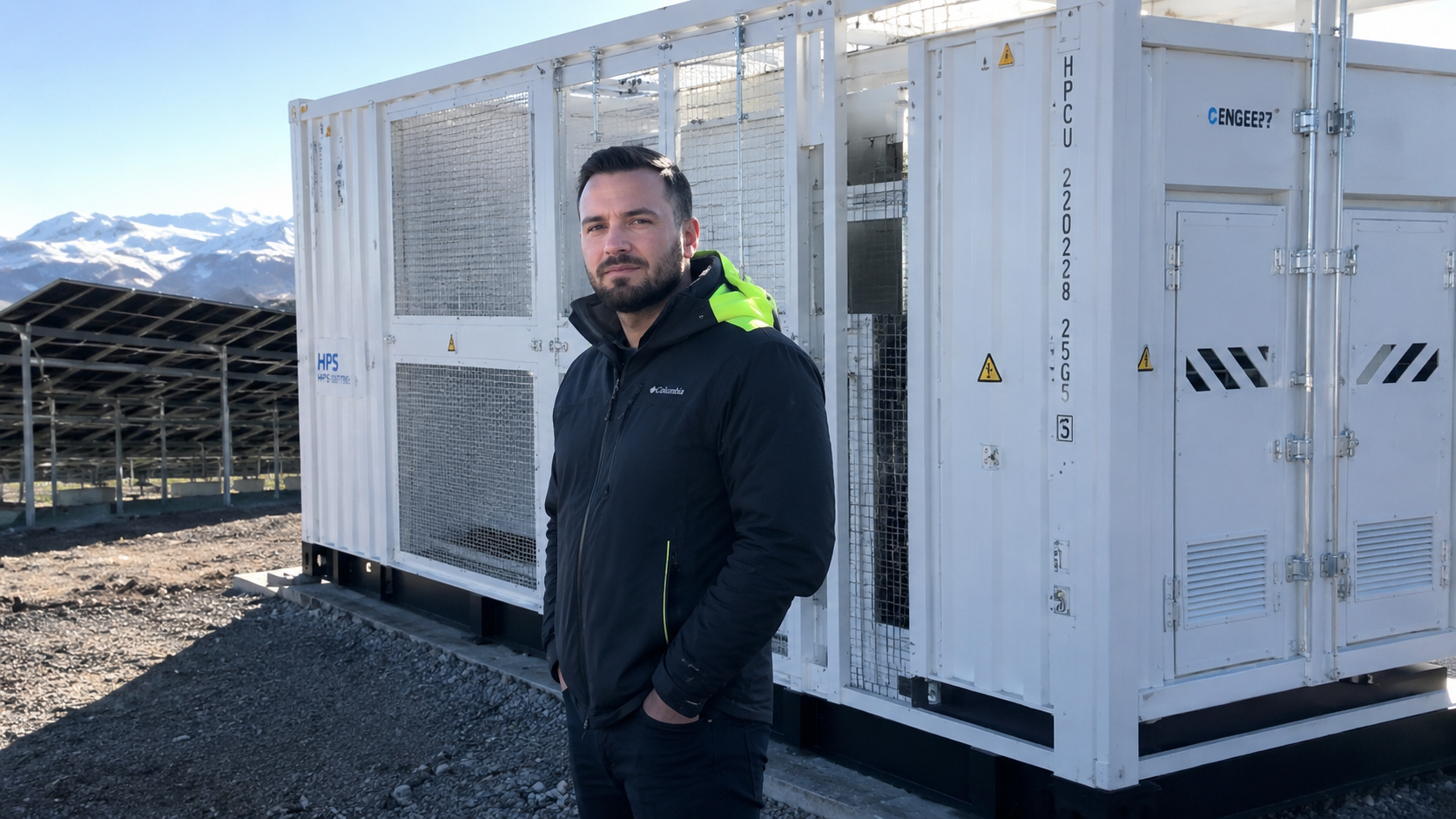
The renewable energy sector has spent years attracting attention through ambitious promises about sustainability, climate targets, and green transformation. Yet behind the public messaging lies a more difficult operational reality. Energy systems cannot function on vision alone. They depend on infrastructure, financing, execution discipline, and long-term reliability under pressure. That is the environment Igli Reci entered while building IRTech Renewables.
What makes renewable energy businesses challenging is that they operate at the intersection of technology, regulation, economics, and public expectation simultaneously. Companies are expected to innovate quickly while navigating infrastructure constraints and volatile market conditions. Igli Reci appears to have approached IRTech Renewables with a more grounded understanding of that complexity. Rather than positioning the company around idealism alone, the business seems built around the practical challenge of making renewable systems commercially dependable.
The Problem IRTech Renewables Was Really Solving
The core issue IRTech Renewables addressed was not simply access to renewable energy technology. The larger problem was implementation reliability. Many businesses and institutions support sustainability goals conceptually, yet adoption often slows because renewable systems can appear operationally complex, financially uncertain, or difficult to integrate into existing infrastructure. IRTech Renewables positioned itself around reducing that uncertainty.
That challenge became increasingly important as governments and private companies accelerated decarbonization targets. Demand for renewable solutions expanded rapidly, but execution quality varied significantly across markets. Businesses needed partners capable of delivering not only technology, but also operational clarity and long-term stability. Igli Reci appears to have recognized that trust in renewable energy depends heavily on execution consistency rather than environmental messaging alone.
There was also a broader market inefficiency developing. Many renewable energy providers focused heavily on expansion narratives while underestimating customer concerns around cost predictability, maintenance, and operational resilience. IRTech Renewables seems positioned around addressing those practical concerns directly. In infrastructure-related industries, confidence often matters as much as innovation itself.
Why Igli Reci Saw the Industry Differently
Igli Reci appears to understand renewable energy less as a trend sector and more as a long-term infrastructure transition. That perspective changes how a company approaches growth. Instead of chasing visibility through ambitious promises alone, the focus shifts toward operational durability, technical reliability, and sustainable scaling. In energy markets, those factors often determine whether projects remain commercially viable over time.
His approach also reflects an understanding of how businesses evaluate risk. Companies adopting renewable infrastructure are rarely making purely ideological decisions. They are evaluating long-term operating costs, regulatory pressures, energy security, and financial predictability simultaneously. IRTech Renewables appears positioned around helping organizations navigate those overlapping concerns rather than treating sustainability as a standalone sales argument.
There is also a notable realism in this type of leadership philosophy. Renewable energy markets frequently experience hype cycles tied to political shifts, investment trends, or public enthusiasm. Igli Reci seems to recognize that durable businesses cannot rely entirely on momentum generated externally. Operational credibility becomes essential because infrastructure projects are judged over years, not quarters.
What Made Igli Reci Different From Competitors
What separated Igli Reci from many competitors was the emphasis on execution discipline instead of pure expansion speed. Renewable energy sectors often reward companies capable of generating visibility quickly through aggressive growth targets and ambitious projections. IRTech Renewables appears to have approached growth more cautiously, focusing on reliability and project sustainability rather than scale alone.
Competitors also frequently position renewable adoption primarily through environmental urgency. While sustainability remains commercially important, businesses still need operational reassurance before committing to infrastructure investments. Igli Reci seems to have recognized that renewable energy adoption accelerates when companies trust the economics and reliability alongside the environmental benefits. That balance likely strengthened IRTech Renewables’ long-term credibility.
The company also benefits from operating with a more measured identity than many firms competing in green energy markets. Excessive promises can weaken trust when projects face delays, cost pressures, or regulatory complexity. IRTech Renewables instead appears positioned around practical implementation and operational confidence. That restraint can become a strategic advantage in industries shaped by long-term infrastructure commitments.
The Decision That Changed IRTech Renewables
The defining decision for IRTech Renewables was treating operational dependability as the company’s central competitive advantage rather than relying purely on renewable energy demand growth. That distinction shaped how the business approached project execution, partnerships, and expansion. Instead of assuming market momentum would solve operational challenges automatically, the company appears to have prioritized stability from the beginning.
That strategy carried risk because infrastructure-focused growth often requires slower scaling and higher operational discipline. Renewable energy markets frequently reward aggressive expansion narratives, particularly during periods of strong investment activity. Igli Reci appears to have accepted the tradeoff between rapid visibility and sustainable execution. The underlying assumption was that long-term trust would ultimately matter more than short-term momentum.
The decision also influenced how IRTech Renewables competed inside an increasingly crowded renewable energy market. Rather than functioning purely as a technology provider, the company positioned itself closer to a long-term implementation partner. That distinction matters because energy customers increasingly value operational reliability and continuity alongside innovation.
Turning Mission Into Operations
Operational execution becomes especially important in renewable infrastructure because projects directly affect energy continuity and financial performance. For IRTech Renewables, maintaining trust likely required disciplined coordination across engineering, installation, maintenance, supply chain management, and customer support. Small operational failures can quickly undermine confidence in larger energy transitions.
Hiring and organizational culture also become strategically important under those conditions. Renewable energy businesses need teams capable of balancing technical expertise with practical execution. Igli Reci’s operational challenge was likely ensuring that IRTech Renewables maintained quality standards while scaling into more competitive and demanding markets. That balancing act becomes increasingly difficult as infrastructure projects expand in size and complexity.
There is also the broader issue of sustainability accountability itself. Customers and regulators increasingly expect renewable businesses to demonstrate transparency around sourcing, performance, and long-term impact. IRTech Renewables appears positioned within that larger shift where operational credibility becomes inseparable from environmental credibility. That changes how renewable energy companies communicate internally and externally.
The Difficult Reality of Scaling
Scaling IRTech Renewables introduces pressures familiar to many infrastructure-focused businesses. Renewable energy projects require significant capital coordination, regulatory navigation, and long-term operational planning. Growth therefore magnifies execution risks quickly because infrastructure failures carry financial and reputational consequences simultaneously.
Competition across renewable energy also continues intensifying globally. Established energy companies, technology startups, and international infrastructure groups are all competing aggressively for market share and institutional partnerships. IRTech Renewables therefore has to maintain differentiation in an increasingly crowded environment where pricing pressure and technological change move rapidly.
There is also the broader uncertainty surrounding global energy markets themselves. Supply chain disruptions, geopolitical tensions, fluctuating material costs, and changing government policies continue affecting renewable investment environments worldwide. Igli Reci’s challenge is ensuring that IRTech Renewables remains adaptable without compromising the operational consistency that initially built trust with customers and partners.
What Igli Reci’s Story Actually Reveals
Igli Reci and IRTech Renewables reflect a broader reality about the renewable energy transition: sustainability alone does not build durable infrastructure companies. Long-term success depends on execution quality, operational resilience, and the ability to deliver reliability under commercial pressure. That changes how renewable businesses create trust.
The larger lesson is that infrastructure industries reward discipline more than excitement over time. IRTech Renewables suggests that renewable energy adoption becomes sustainable when businesses treat reliability as seriously as innovation. Igli Reci’s story ultimately reveals that the future of renewable energy will likely belong not only to the companies with ambitious visions, but to the ones capable of executing consistently once the attention moves elsewhere.