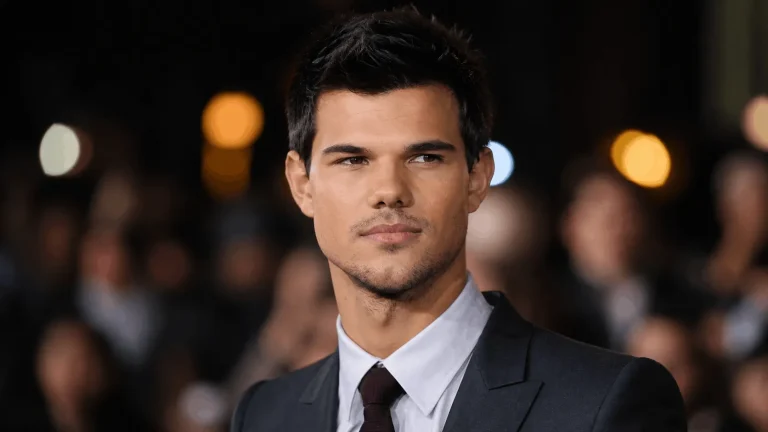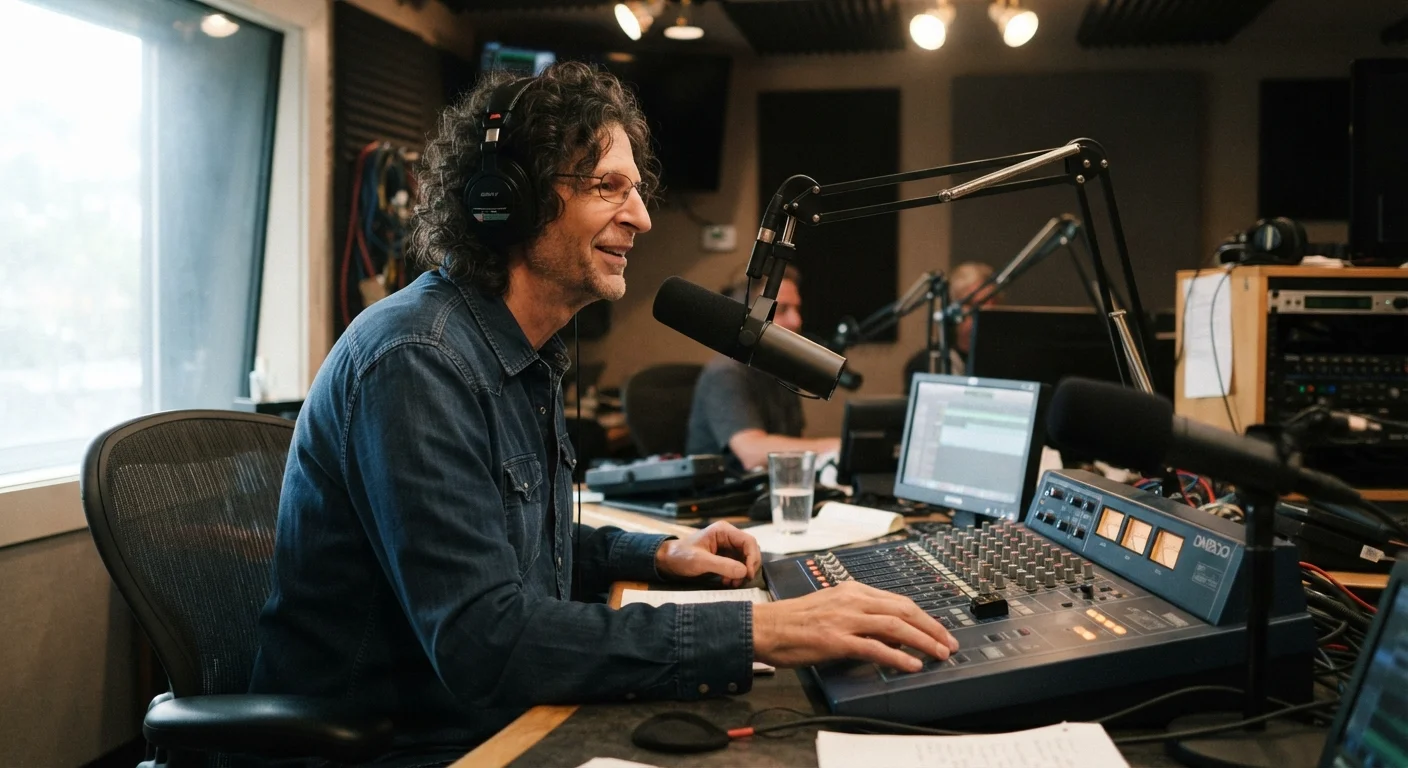
Howard Stern is an American radio host and media personality best known for “The Howard Stern Show,” a program he has broadcast for close to five decades across terrestrial and satellite radio. He built his reputation as a “shock jock” in the 1980s, became one of the highest-paid figures in radio history, and now hosts a scaled-back weekly show on SiriusXM that is expanding to HBO Max in September 2026.
Who Is Howard Stern
Howard Allan Stern was born on January 12, 1954, in Roosevelt, New York. He grew up with an early interest in broadcasting, partly influenced by his father, who worked as a sound engineer. After graduating from Boston University with a communications degree in 1976, Stern took a series of on-air jobs at small stations before landing in New York, where his career eventually took off.
By the 1990s, Stern had branded himself the “King of All Media,” a nickname reflecting his reach across radio, television, film, and publishing. He filed a trademark for the phrase in 2006, cementing it as part of his public identity.
Early Radio Jobs and the Path to New York
Stern’s first professional radio shift happened on May 13, 1977, at WRNW in Briarcliff Manor, New York, where he worked as a disc jockey playing music and reading basic announcements. Over the next several years, he moved through a string of stations, including WCCC in Hartford, WWWW in Detroit, and WWDC in Washington, D.C., refining the on-air persona that would later define his show.
In 1982, Stern joined WNBC in New York City, where he worked afternoons until he was fired in 1985. That firing turned into an opportunity: later that year, he joined WXRK, also known as K-Rock, beginning a 20-year run in New York that turned him into a national name.
Rise to Fame on Terrestrial Radio
Stern’s morning show entered national syndication in 1986. At its peak, it aired in roughly 60 markets and reached about 20 million listeners a week, an audience size few radio hosts have matched before or since. He also became the first host to hold the number one morning show simultaneously in both New York City and Los Angeles.
His outspoken, often crude style repeatedly drew scrutiny from the Federal Communications Commission. Station owners carrying his show were fined a combined total of roughly $2.5 million over the years for content the FCC deemed indecent, making Stern one of the most fined figures in American broadcasting history.
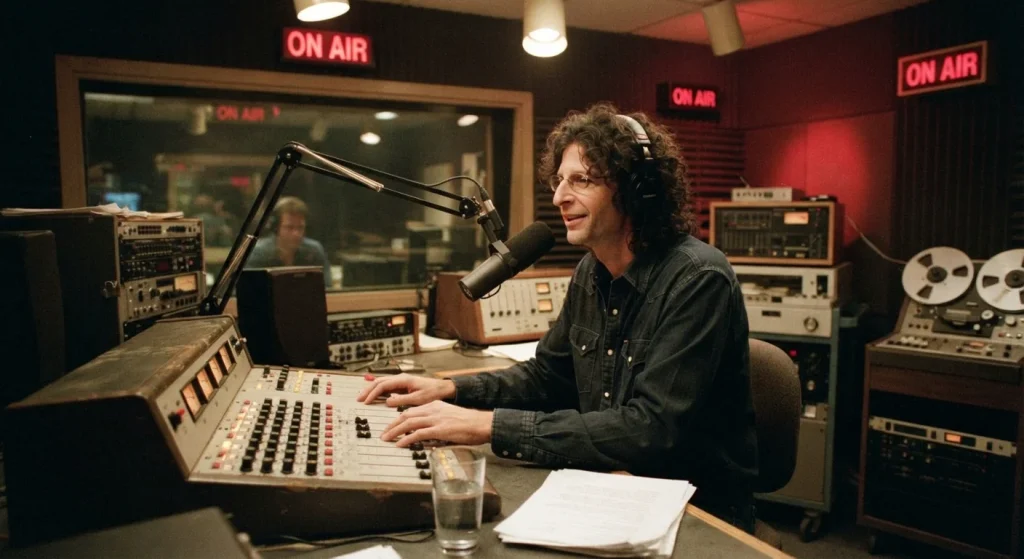
Rather than tone down his material, Stern leaned into the conflict, treating the FCC’s attention as part of the show itself and discussing the fines openly with his audience. That approach built a loyal listener base that stuck with him through station changes, format tweaks, and repeated regulatory pressure, and it set the tone for the eventual jump to a platform with no content restrictions at all.
Awards and Industry Recognition
Billboard named Stern its Nationally Syndicated Air Personality of the Year eight years in a row, a run that reflected both his ratings dominance and his staying power in a format where hosts often burn out after a few seasons. Forbes included him on its Celebrity 100 list multiple times, including in 1999, 2005, and 2006, tracking his combined earnings across radio, television, and publishing.
He has also picked up recognition outside traditional broadcasting circles. Time magazine named him one of the 100 most influential people in the world in 2006, the same year he moved his show to satellite radio, underscoring how closely his industry impact and his platform change were linked in the public eye.
The Move to Sirius Satellite Radio
Facing ongoing FCC pressure, Stern signed a five-year, $500 million deal with Sirius Satellite Radio in 2004, a contract that made headlines for its size and for moving one of radio’s biggest names to a subscription platform free of broadcast content rules. His first satellite episode aired on January 9, 2006.
The switch paid off for both sides. Sirius and XM Satellite Radio merged in 2008 to form SiriusXM, and Stern re-signed with the company multiple times over the following two decades, most recently agreeing to a new three-year deal announced on December 16, 2025. SiriusXM confirmed that agreement in a February 5, 2026 filing with the Securities and Exchange Commission, describing it as securing three more years of exclusive interviews with figures in music, comedy, and entertainment.
|Each contract renewal came with speculation that Stern might finally retire, and 2025 was no exception. Rumors of a departure circulated for months before the December announcement, and Stern used the moment to play a prank on his own audience by suggesting Andy Cohen would take over his channel before confirming he was staying on with a lighter workload instead.
Beyond Radio: Books, Film, and Television
Stern’s reach outside radio has been substantial. His 1993 autobiography, “Private Parts,” and his 1995 follow-up, “Miss America,” both debuted at number one on the New York Times bestseller list, each selling more than a million copies. The 1997 film adaptation of “Private Parts,” which featured Stern and his radio staff playing themselves, topped the U.S. box office in its opening week.
He later returned to publishing with “Howard Stern Comes Again” in 2019, a collection built around interviews he had conducted over his career. On television, Stern spent four seasons as a judge on NBC’s “America’s Got Talent,” from 2012 to 2015, introducing his radio persona to a broader mainstream audience.
Howard Stern in 2026: A Smaller Schedule and a New HBO Max Show
Stern’s current SiriusXM contract runs through 2028, but the shape of the show has changed significantly in 2026. After his December 2025 renewal, reports throughout the summer indicated the program would move from three new episodes a week to just one, with dozens of staff positions eliminated during the transition.
1. Studio and Staffing Changes
Alongside the reduced schedule, Stern’s longtime custom studio inside SiriusXM’s New York offices, largely unused since the pandemic, began renovations in mid-2026 to make room for other talent. SiriusXM also consolidated Stern’s two channels, Howard 100 and Howard 101, onto a single channel starting September 1, 2026, with Andy Cohen’s Radio Andy taking over the vacated slot. Longtime staples of the show have been affected as well. Comedian and frequent guest Michael Rapaport announced on his own podcast in early September 2026 that the show’s long-running Fantasy Football League segment, a fixture for close to two decades, had been dropped as part of the broader changes.
2. HBO Max Expansion
On August 31, 2026, SiriusXM and Stern announced that new episodes would resume airing every Monday starting September 14, with the first HBO Max episode following on September 17 and new installments releasing every Thursday after that. This marks the first time Stern’s live SiriusXM show has been adapted into a standalone streaming format, extending its reach well beyond satellite radio subscribers.
Despite the reduced weekly output, SiriusXM and Stern have both stated the show is continuing, not ending. Stern himself has described the new arrangement as a way to keep broadcasting while gaining more personal free time.
Reaction from longtime listeners has been mixed. Some have welcomed the idea of a tighter, more focused weekly show after years of daily broadcasts, while others have pointed to the loss of familiar staff, segments, and the second channel as signs that the show’s scope is shrinking even if it technically remains on the air. Stern addressed the speculation directly on his program, telling his audience that he and longtime co-host Robin Quivers are staying at SiriusXM and are not planning to leave the network.
Personal Life
Stern has been open about his mental health over the years. In his 1995 book “Miss America,” he disclosed that he lives with obsessive-compulsive disorder, a condition he said began during his college years and continued through much of his career. He has also spoken candidly on his show about years of therapy, which he has credited with shifting his interviewing style toward a more empathetic approach later in his career.
He married his second wife, Beth Stern, in 2008, and she has publicly defended him during the recent SiriusXM restructuring. Stern owns a home in Palm Beach, Florida, purchased in 2013 for a reported $52 million.
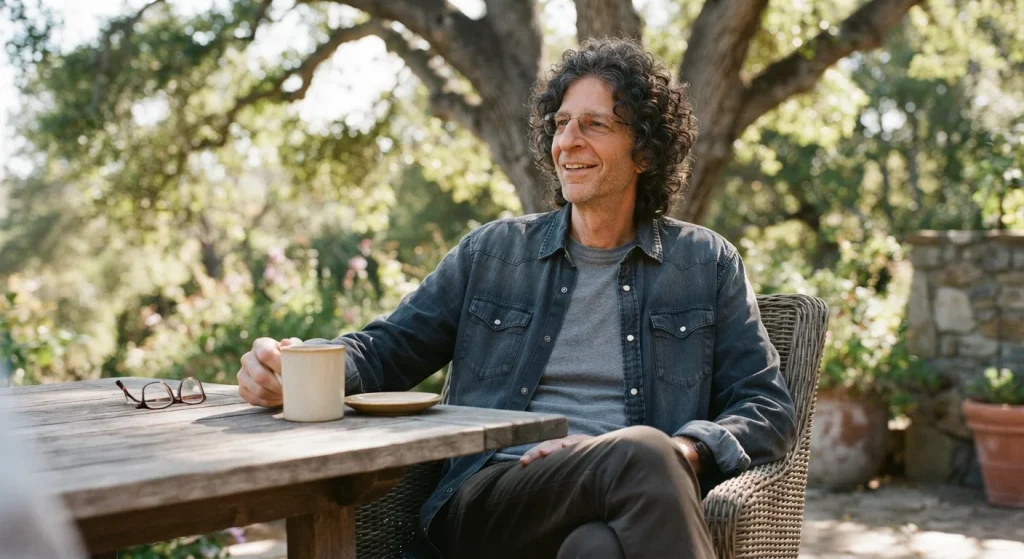
Outside of broadcasting, Stern has taken up photography as a personal interest in recent years, with his work appearing in regional publications including Hamptons magazine and WHIRL. Friends and colleagues who have known him for decades, including longtime co-host Robin Quivers, have described the shift in his on-air demeanor over time as a genuine change rather than a performance, tied to the therapy work he has discussed publicly on the show.
Legacy and Influence
Stern’s influence on talk radio is hard to overstate. He helped define the personality-driven morning show format that later hosts across the country would copy, and his eventual move to satellite radio is often cited as a turning point that pushed other major broadcasters to take subscription audio seriously. His later shift toward long-form celebrity interviews, including widely discussed conversations with Bruce Springsteen in 2022, President Joe Biden in April 2024, and Vice President Kamala Harris in October 2024, showed a different side of a host once known mainly for shock value.
Nearly fifty years after his first radio shift at a small station in Briarcliff Manor, Stern remains one of the few broadcasters to successfully carry an audience from AM and FM radio to satellite and now to streaming television.
The current round of changes at SiriusXM, including the reduced weekly schedule and the consolidation of his radio channels, marks one of the biggest structural shifts in Stern’s satellite era since he first arrived in 2006. For an industry watching how legacy audio talent adapts to streaming, Stern’s move to HBO Max in September 2026 offers an early, closely watched test case. Whether the format change grows his audience or simply reshapes an existing one, it extends a career that has already outlasted several full cycles of change in American media.