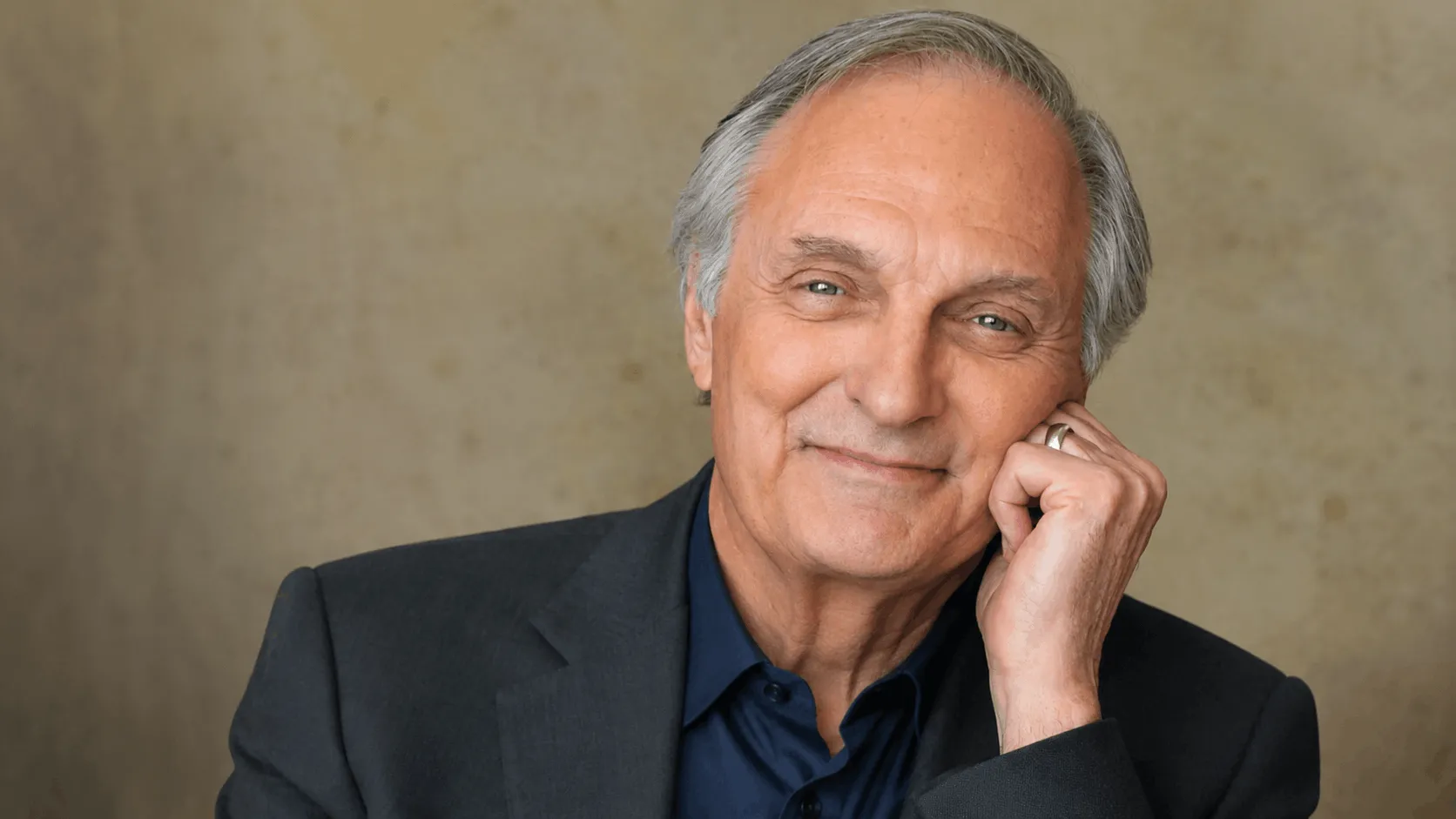
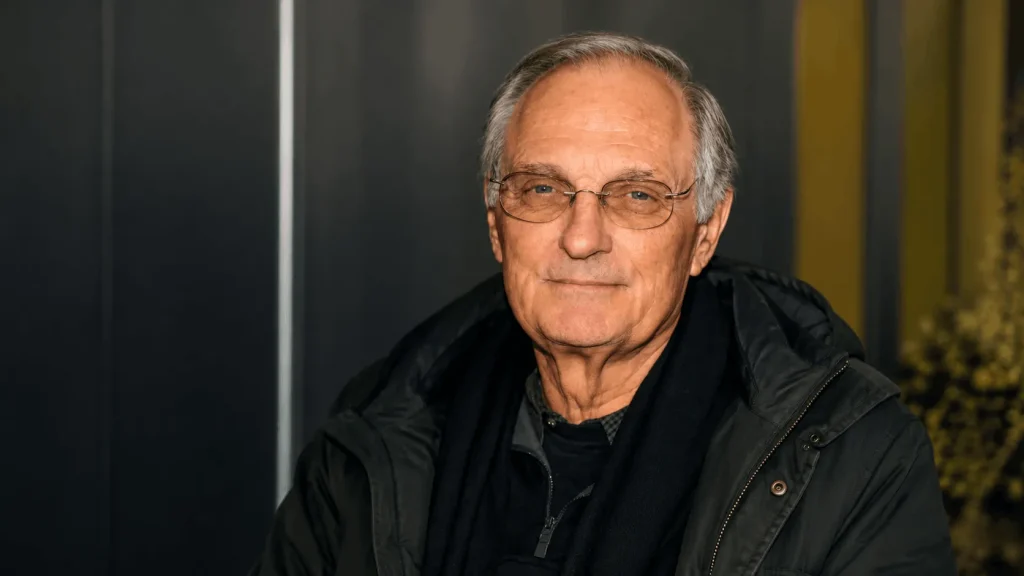
Alan Alda is an American actor, director, writer, and science communicator best known for playing Capt. Benjamin Franklin “Hawkeye” Pierce on MAS*H for eleven seasons. Born Alphonso Joseph D’Abruzzo in January 1936, he turned 90 in early 2026 and has spent nearly seven decades moving between comedy, drama, and a quieter second career built around teaching scientists how to explain their work in plain language. His credits stretch from Broadway to The West Wing to Marriage Story, and for the past several years he has spoken openly about living with Parkinson’s disease.
A Childhood Shaped by Illness, Burlesque, and a Mother’s Struggles
Alda’s childhood was unusual even by show-business standards. His father, Robert Alda, sang between acts at burlesque theaters before moving on to vaudeville and Broadway, and young Alan spent much of his early childhood backstage around comedians and showgirls. His mother struggled with mental illness for most of his childhood, something Alda later wrote about with unusual honesty in his memoirs. At age seven he also contracted polio, treated at the time with a painful regimen of hot wool blankets and stretching.
He made his stage debut at 17 in a summer stock production in Barnesville, Pennsylvania, after performing comedy routines with his father at the Hollywood Canteen two years earlier. At Fordham University he first considered medicine, largely to satisfy his father’s hopes, before switching to English. During his junior year he studied in Europe, where he performed alongside his father on stage in Rome and on television in Amsterdam, then returned to the United States to study at the Cleveland Play House on a Ford Foundation grant. He also served roughly a year and a half in the Army, including a stint stationed in Korea, an experience that later gave his work on MAS*H an unusually grounded sense of place.
Finding His Voice in Chicago Improv
After college, Alda trained in improvisational acting with Paul Sills at the Cleveland Play House, then joined the Compass Players, one of the first improv troupes in the country. When Sills and his collaborators founded The Second City in Chicago in 1959, Alda joined that ensemble too, working alongside future stars including Alan Arkin and Barbara Harris.
The comic timing and quick thinking he built on those stages later became one of his signatures as an actor and writer. He carried the training into a Second City revue that ran for nearly five years in New York, and from there into a steady run of stage and television work through the 1960s, including his Broadway debut and a run in Purlie Victorious alongside Ossie Davis and Ruby Dee.
Becoming Hawkeye Pierce
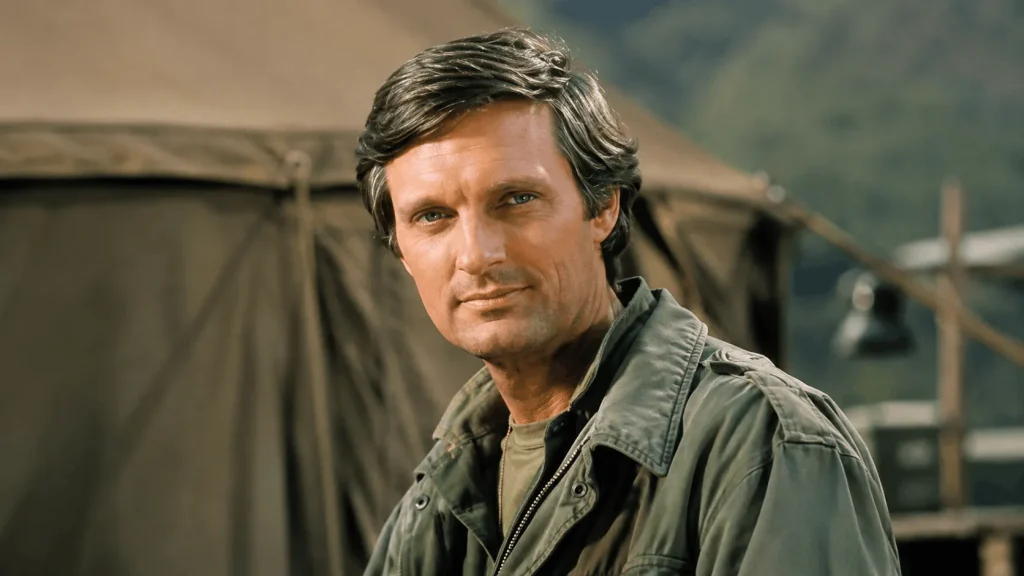
Alda’s defining role arrived in 1972, when he was cast as Hawkeye Pierce in the CBS wartime comedy-drama MAS*H. Over eleven seasons he did not just act in the role. He also wrote and directed a number of episodes, and he directed the series finale, “Goodbye, Farewell and Amen,” which remains one of the most-watched single television episodes in American history.
That triple involvement earned him Emmy Awards for acting, writing, and directing on the same series, a combination no other performer has managed. The role also shaped how audiences saw him afterward: a sharp, principled character who used humor to cope with the absurdity and horror of war, played by an actor who shared much of that same sensibility off screen.
A Career That Kept Growing After MAS*H
On screen, Alda moved easily between comedy and drama in the decades that followed. He starred in Same Time, Next Year and California Suite in 1978, then made his directing debut with The Four Seasons in 1981, a film that also featured two of his daughters. He went on to appear in Woody Allen’s Crimes and Misdemeanors and Manhattan Murder Mystery, the comedy Flirting with Disaster, and the romantic comedy What Women Want opposite Mel Gibson. He later earned an Academy Award nomination for playing the corrupt Sen. Owen Brewster opposite Leonardo DiCaprio in Martin Scorsese’s The Aviator, and he closed out the 2010s with roles in Tower Heist, Bridge of Spies, and Noah Baumbach’s Marriage Story.
Television kept calling him back too. He won an Emmy for playing Dr. Robert Gallo in the HBO film And the Band Played On, and another for playing presidential candidate Sen. Arnold Vinick on The West Wing. He took recurring parts on ER, 30 Rock, and The Blacklist, and later played the manipulative attorney Solomon Waltzer on The Good Fight, the courtroom drama spun off from The Good Wife. In a nod to fans of both shows, his Vinick character even turned up in a season-seven episode of The Good Wife itself.
Alda’s stage career ran alongside all of it. He earned three Tony Award nominations across four decades of Broadway work, for the musical The Apple Tree in 1967, Neil Simon’s Jake’s Women in 1992, and a 2005 revival of David Mamet’s Glengarry Glen Ross. He also starred in the first American production of the play “Art” and appeared in Purlie Victorious and The Owl and the Pussycat earlier in his career.
Teaching Scientists to Talk Like Humans
For eleven years, Alda hosted the PBS series Scientific American Frontiers, interviewing researchers about their work. The experience convinced him that many brilliant scientists struggled to explain their ideas to anyone outside their field, and that the gap between good research and public understanding was worth closing.
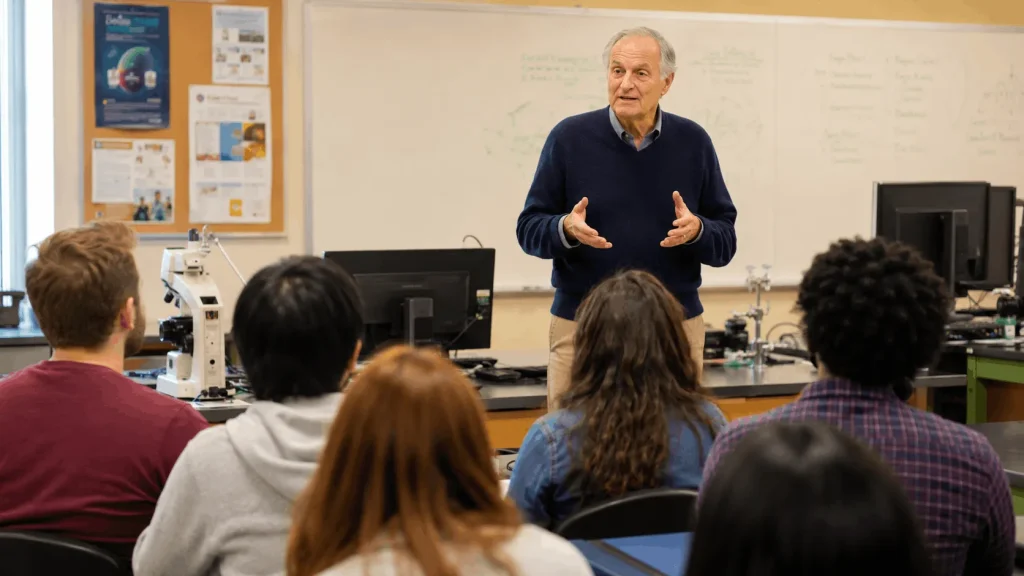
That conviction led him to help found the Alan Alda Center for Communicating Science at Stony Brook University, where he has served as a visiting professor and helped design workshops that use improv exercises, the same ones he learned at Second City decades earlier, to help researchers speak more naturally about their work. Since 2018 he has also hosted the podcast Clear+Vivid, where he talks with guests about the mechanics of genuine conversation, listening, and empathy.
A Writer and a Longtime Advocate
Writing has run alongside acting for most of Alda’s career. His 2005 memoir, Never Have Your Dog Stuffed and Other Things I’ve Learned, became a New York Times bestseller and opens with a blunt line about his mother’s mental health struggles. He followed it with Things I Overheard While Talking to Myself and If I Understood You, Would I Have This Look on My Face?, both built around the same interest in communication that shaped his later career.
Alda was also a visible campaigner for the Equal Rights Amendment through much of the 1970s, at one point addressing the Illinois state legislature directly and facing open hostility from lawmakers opposed to it. The amendment was never ratified, an outcome he later wrote about candidly, but the campaign became a defining chapter in how he thought about public advocacy. He also wrote and starred in the play Radiance: The Passion of Marie Curie, about the physicist’s life and work.
Living Openly With Parkinson’s Disease
Alda was diagnosed with Parkinson’s disease in 2015 and kept the news private for three and a half years. He decided to go public in 2018 after noticing his thumb twitch during a television appearance, telling CBS This Morning he wanted to share the news himself rather than have it reported as a sad story later on.
He has described the disease as different for nearly everyone who has it, and said he manages his own symptoms partly through regular boxing, walking, and biking. He has continued acting, giving talks, and recording his podcast in the years since, and family members say he remains active and in good spirits well into his nineties. His advocacy also drew attention to Parkinson’s research funding, and he has appeared alongside other public figures who share the diagnosis, including Michael J. Fox, to encourage patients to seek an early diagnosis rather than avoid one out of fear.
Marriage and Family Life
Alda met Arlene Weiss, a photographer, clarinetist, and author, at a 1956 dinner party where the two of them were the only guests willing to eat a rum cake that had fallen on the floor. They married on March 15, 1957, and had three daughters between 1958 and 1961, including actress Beatrice Alda, who went on to appear in her father’s film The Four Seasons.
The marriage has lasted nearly seven decades, a rarity in any profession and especially in entertainment. Alda has also spoken publicly about living with prosopagnosia, or face blindness, a condition that makes it hard for him to recognize people he has met before, sometimes even close colleagues he has worked with for years. He has said that learning to compensate for it, by paying closer attention to voices, mannerisms, and context, reshaped how he thinks about communication generally.
Awards and Lasting Recognition
Across stage, film, and television, Alda’s full record adds up to 45 award wins and 73 nominations, including six Primetime Emmy Awards, six Golden Globe Awards, and nominations for an Academy Award, three Tony Awards, two BAFTAs, and a Grammy. The Television Academy inducted him into its Hall of Fame in 1994, and the Screen Actors Guild honored him with a life achievement award in 2019, recognition for a body of work that few actors of any generation can match.
Alan Alda turned 90 on January 28, 2026, marking the birthday with a quiet dinner alongside family and friends. Nearly seventy years after he first stepped onto a Chicago improv stage, he is still recognized as one of the more versatile performers of his generation, and as one of the few actors who built an entirely separate legacy in how scientists talk to the rest of us.