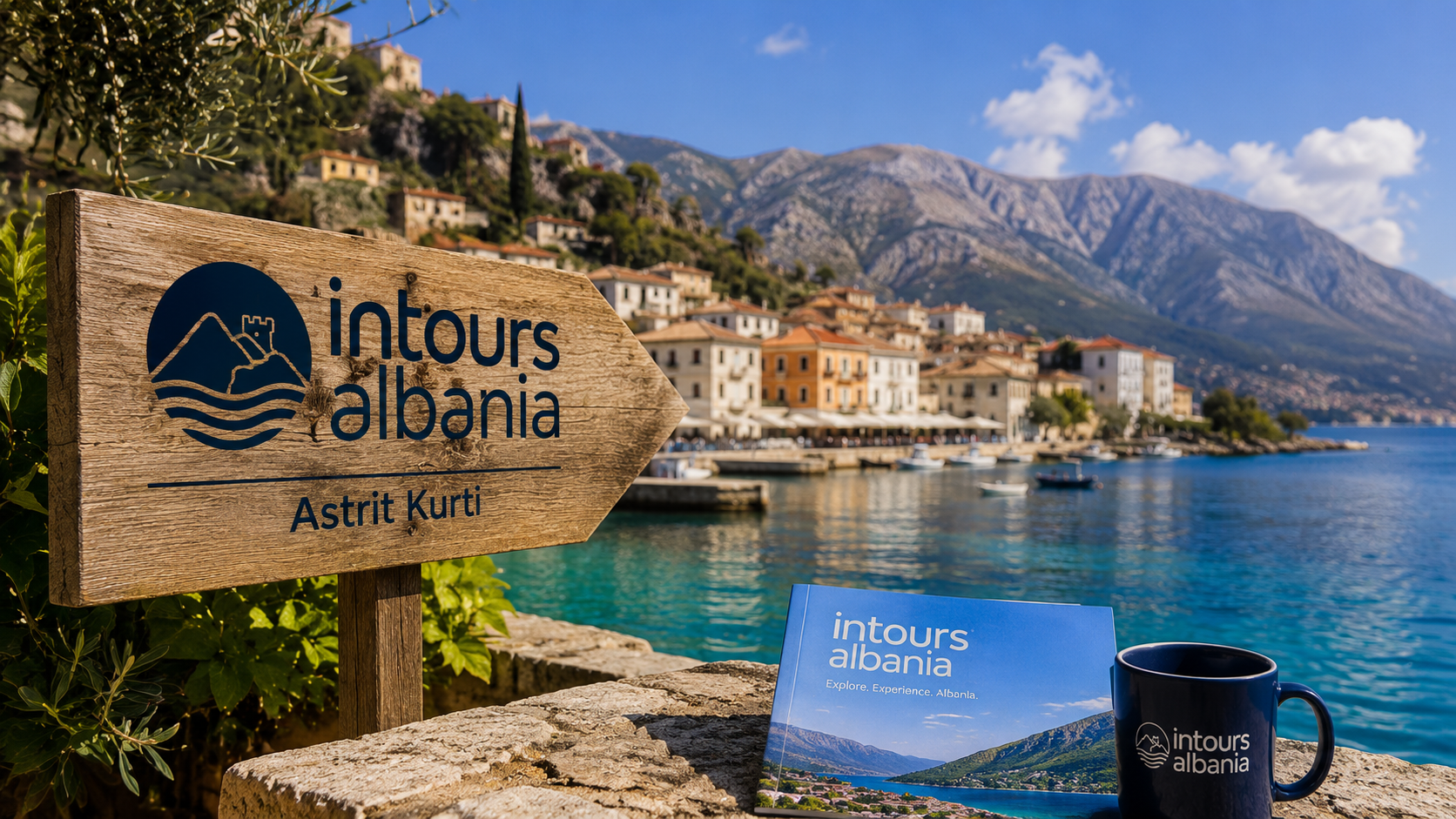
Tourism industries often grow fastest when destinations become fashionable internationally, but rapid attention can create its own problems. Local infrastructure becomes strained, experiences become standardized, and operators begin optimizing for tourist volume rather than long-term reputation. In emerging travel markets especially, the pressure to commercialize quickly can weaken the very authenticity visitors originally came to experience. That is the environment Astrit Kurti stepped into while building Intours Albania.
Albania’s tourism sector has expanded dramatically over the last decade as international travelers increasingly searched for alternatives to overcrowded Mediterranean destinations. The country’s coastline, mountain regions, and cultural history attracted growing attention, but visibility alone did not automatically create trust with international visitors. Travelers entering less familiar markets often depend heavily on local operators to navigate logistics, expectations, and safety confidently. Astrit Kurti appears to have recognized that tourism credibility becomes especially important when a destination itself is still shaping its global reputation.
The Problem Intours Albania Was Really Solving
The core issue Intours Albania addressed was not simply travel access. The larger challenge was reducing uncertainty for international visitors exploring a rapidly developing tourism market. Albania offered strong natural and cultural appeal, but many travelers still lacked familiarity with transportation systems, regional coordination, accommodation standards, and local travel logistics. Intours Albania positioned itself around creating reliability inside that uncertainty.
That challenge became increasingly important as Albania’s visibility expanded globally. Social media and digital travel platforms accelerated interest quickly, yet digital exposure often creates unrealistic or incomplete expectations. Travelers needed operators capable of translating online curiosity into dependable real-world experiences. Astrit Kurti appears to have understood that tourism businesses in emerging destinations must build confidence before they can build loyalty.
There was also a broader market inefficiency inside regional tourism itself. Rapid tourism growth can create fragmented experiences when infrastructure, transportation, and service quality evolve unevenly across destinations. Intours Albania seems positioned around coordinating those moving parts more effectively. In tourism, operational consistency often shapes a destination’s reputation as much as scenery or marketing campaigns do.
Why Astrit Kurti Saw the Industry Differently
Astrit Kurti appears to understand tourism less as a hospitality business alone and more as a trust business built around local interpretation. That perspective changes how a company approaches growth. Instead of focusing only on increasing visitor numbers, the emphasis shifts toward experience quality, operational reliability, and long-term destination reputation. In travel industries, those factors frequently determine whether tourism remains sustainable over time.
His approach also reflects an understanding of how modern travelers behave. Tourists increasingly want experiences that feel local and culturally grounded rather than overly packaged or standardized. At the same time, they still expect efficiency, safety, and professional coordination. Intours Albania appears positioned around balancing authenticity with operational structure instead of sacrificing one for the other.
There is also a notable realism in this type of tourism strategy. Many travel businesses rely heavily on promotional imagery and aspirational marketing, but tourism experiences are ultimately judged by execution. Transportation delays, inconsistent service, or poor coordination quickly undermine traveler confidence. Astrit Kurti seems to recognize that sustainable tourism growth depends on operational trust as much as destination appeal.
What Made Astrit Kurti Different From Competitors
What separated Astrit Kurti from many competitors was the emphasis on long-term destination credibility instead of short-term tourism volume. Fast-growing travel markets often create pressure for operators to maximize bookings aggressively while demand is rising. Intours Albania appears to have approached growth more carefully, focusing on reliability and traveler experience quality rather than scale alone.
Competitors in tourism frequently compete through pricing or heavily commercialized itineraries that prioritize efficiency over authenticity. Astrit Kurti seems to have recognized that Albania’s long-term tourism value depends partly on preserving a sense of local identity and trust. That understanding likely shaped how Intours Albania approached partnerships, travel experiences, and customer relationships.
The company also benefits from operating with a more measured tone than many tourism brands competing online. Excessive marketing can sometimes create expectations destinations struggle to meet operationally. Intours Albania instead appears positioned around practical confidence and local expertise. That restraint can become strategically valuable in emerging tourism markets where reputation remains highly sensitive.
The Decision That Changed Intours Albania
The defining decision for Intours Albania was treating trust and coordination as the company’s primary competitive advantage rather than relying solely on Albania’s growing popularity as a destination. That distinction shaped how the business approached customer service, logistics, partnerships, and expansion. Instead of assuming tourism demand alone would sustain growth, the company appears to have prioritized experience reliability from the beginning.
That strategy carried risk because operationally intensive tourism businesses often scale more slowly than volume-driven models. Travel markets frequently reward companies capable of maximizing bookings quickly during tourism booms. Astrit Kurti appears to have accepted the tradeoff between rapid expansion and long-term credibility. The underlying assumption was that destination trust would ultimately matter more than short-term visibility.
The decision also influenced how Intours Albania positioned itself inside the broader Balkan tourism market. Rather than functioning purely as a booking intermediary, the company appears to have aimed for a deeper role as a trusted local guide and operational partner. That distinction matters because travelers increasingly value contextual expertise alongside convenience.
Turning Mission Into Operations
Operational execution becomes especially important inside tourism because customer experiences unfold in real time and under unpredictable conditions. For Intours Albania, maintaining trust likely required disciplined coordination across transportation, accommodation, scheduling, customer communication, and local partnerships. Small operational breakdowns can quickly shape how travelers perceive an entire destination.
Hiring and organizational culture also become strategically important under those conditions. Tourism businesses depend heavily on interpersonal quality because guides, coordinators, and support staff often become the face of the destination itself. Astrit Kurti’s operational challenge was likely ensuring that Intours Albania maintained consistent service standards while tourism demand expanded across Albania.
There is also the broader issue of sustainability in modern tourism growth. Destinations experiencing rapid visibility often face pressure on infrastructure, local communities, and environmental resources. Intours Albania appears positioned within the larger movement toward more responsible tourism models where long-term destination health matters alongside short-term commercial performance. That changes how tourism operators think about growth itself.
The Difficult Reality of Scaling
Scaling Intours Albania introduces pressures common to many fast-growing tourism businesses. Customer expectations rise quickly once destinations gain international visibility, while infrastructure and service systems may still be evolving locally. Tourism operators therefore face constant pressure to maintain reliability despite factors outside their direct control.
Competition across Balkan and Mediterranean tourism also continues intensifying. International platforms, regional operators, and digital travel companies are all competing for traveler attention and market share. Intours Albania therefore has to defend differentiation in a market increasingly shaped by pricing pressure and online visibility competition.
There is also the broader unpredictability of global travel itself. Economic slowdowns, geopolitical tensions, airline disruptions, and changing traveler behavior can affect tourism demand rapidly. Astrit Kurti’s challenge is ensuring that Intours Albania remains adaptable without weakening the local credibility and operational discipline that initially helped build trust with travelers.
What Astrit Kurti’s Story Actually Reveals
Astrit Kurti and Intours Albania reflect a broader truth about modern tourism: destinations do not build lasting reputations through marketing alone. Long-term tourism credibility depends on whether visitors feel confident, understood, and connected once they arrive. That places operational trust at the center of sustainable tourism growth.
The larger lesson is that emerging travel markets succeed when local operators protect authenticity while improving reliability. Intours Albania suggests that tourism businesses create the most value when they reduce uncertainty without removing cultural identity. Astrit Kurti’s story ultimately reveals that the strongest travel brands are often built not around spectacle, but around trust repeated consistently across thousands of individual experiences.