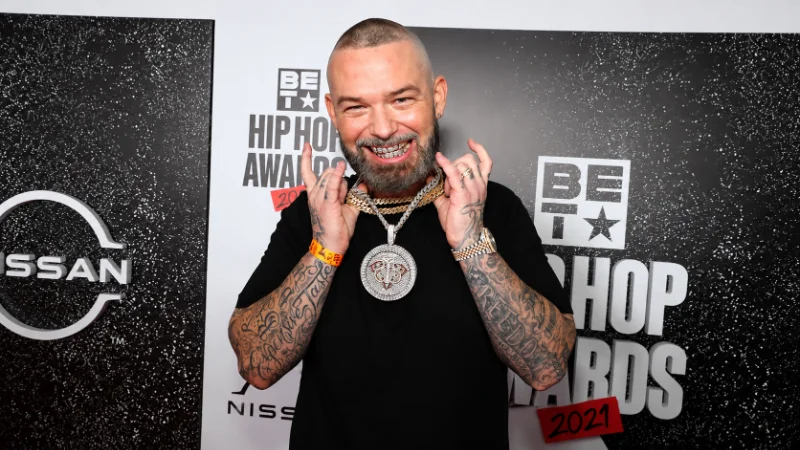
Paul Wall’s net worth is most commonly listed at around $2.5 million, a figure attributed to Celebrity Net Worth and repeated across several entertainment sites. Other outlets have published numbers as high as $8 million or $12 million, but none of those higher estimates cite a verifiable source, so they should be read as guesses rather than facts. What is better documented is where the money actually came from: two decades of major label and independent album sales, steady touring, and a jewelry business he has co-owned with Johnny Dang since the early 2000s.
Quick Facts
| Category | Detail |
| Real name | Paul Michael Slayton |
| Born | March 11, 1981, Georgetown, Texas |
| Profession | Rapper, songwriter, DJ, businessman |
| Years active | 1998 to present |
| Breakout album | The People’s Champ (2005), certified Platinum by the RIAA |
| Business venture | Co-owner, Johnny Dang & Co. jewelry store, Houston |
| Estimated net worth | Approximately $2.5 million (Celebrity Net Worth), unconfirmed |
Treat that net worth figure as a public estimate. Celebrity net worth sites rarely disclose their methodology, and Wall himself has never confirmed a specific number.
Early Life and Background
Paul Wall was born Paul Michael Slayton in Georgetown, Texas, and grew up in the Houston area, where he later graduated from Jersey Village High School. After high school, he enrolled at the University of Houston and studied mass communications for three years before music took over as his full-time focus.
His first real exposure to the industry had nothing to do with rapping. He worked as a street team promoter on Houston’s north side, handing out flyers and pushing records for touring acts on labels like Cash Money. That grunt work put him inside the local scene early, well before he had a record deal of his own, and it connected him to the Swishahouse label that would eventually sign him.
Houston’s rap scene at the time ran on its own separate economy from the coasts. DJ Screw’s chopped and screwed mixtape style, sold locally on cassette and CD long before streaming existed, built local stars with almost no national radio play. Wall came up learning that same DJ and mixtape circuit, which is part of why his early income was tied to physical product and live shows in Texas years before any national label signed him.
Career and Income Breakdown
1. Breaking Through with Swishahouse and The People’s Champ
Wall’s earliest work came alongside Chamillionaire as the duo The Color Changin’ Click, releasing music through Swishahouse in the late 1990s. His profile grew nationally after a guest verse on Mike Jones’ 2004 single “Still Tippin’,” a record that introduced Houston’s screwed-and-chopped sound to listeners well outside Texas.
That exposure set up the release that actually built his income: The Peoples Champ, his 2005 major label debut on Swishahouse, Asylum, and Atlantic. The album debuted at number one on the Billboard 200 and was certified Platinum by the RIAA. Two of its singles, “Sittin’ Sidewayz” and “Girl,” were each certified Gold for selling 500,000 copies in the United States, and “Girl” reached number 35 on the Billboard Hot 100, his highest solo chart placement. His 2007 follow-up, Get Money, Stay True, also cracked the Billboard 200 top ten.
Those results matter for a net worth estimate because they represent Wall’s only period of true mainstream commercial peak. According to his Wikipedia-documented discography, he has released thirteen solo studio albums since his 2004 debut Chick Magnet, plus six collaborative albums and six mixtapes, but none matched The People’s Champ’s commercial run. His third album, Get Money, Stay True, still reached the Billboard 200 top ten in 2007, and later releases such as Fast Life (2009), Heart of a Champion (2010), Slab God (2015), and Houston Oiler (2016) charted on genre-specific Billboard rankings without repeating that early mainstream reach. The bulk of his catalog income likely still traces back to that mid-2000s stretch, supplemented over time by streaming royalties and a loyal touring base in Texas and the broader South.
2. The Grammy Nomination Behind “Grillz”
Wall’s highest-profile single credit did not even come from his own album. His 2005 guest verse on Nelly’s “Grillz,” also featuring Ali & Gipp, hit number one on the Billboard Hot 100 and earned a nomination for Best Rap Performance by a Duo or Group at the 2007 Grammy Awards. The song mattered commercially in a way few guest verses do: it turned custom dental grills, a Houston jewelry-store product, into a national fashion trend almost overnight.
3. TV Jewelry and Johnny Dang & Co
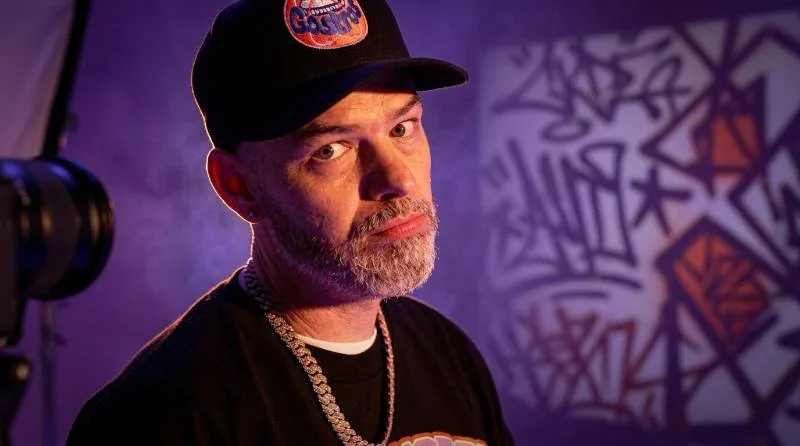
This is the part of Wall’s income story that separates him from most of his Houston peers, and it is the genuine gap most surface-level net worth write-ups skip past with a single sentence. Wall’s early jewelry work with Johnny Dang, sometimes credited as TV Johnny, predates “Grillz” itself. The Texas House of Representatives later confirmed the partnership formally, noting in a 2019 resolution that Wall and Dang “were at the forefront of the grillz fashion accessory craze” starting in 1998, and that Wall’s jewelry store is “patronized by many celebrities.”
In October 2016, Wall and Dang opened Johnny Dang & Co., a two-level jewelry and lifestyle store on Richmond Avenue in Houston. Contemporary Houston Chronicle reporting on the opening described the building as a roughly $4.5 million property carrying custom jewelry and grills alongside apparel brands like True Religion and Lacoste. Wall timed the store’s opening to coincide with the release of his ninth studio album, The Houston Oiler, a detail that shows how tightly his music promotion and retail business are linked. He remains a visible co-owner today rather than a licensed name attached to someone else’s storefront.
4. Acting, Collaborations, and Continued Output
Wall has picked up smaller acting and media credits over the years, including playing the fictional rapper Grillionaire in the 2009 comedy I Hope They Serve Beer in Hell, which he also helped write. His guest-feature list runs well outside his usual Houston circle: Kanye West’s “Drive Slow,” a track that appeared on both West’s Late Registration and Wall’s own The People’s Champ, and Limp Bizkit’s 2011 single “Middle Finger.” His Wikipedia-documented guest appearance count runs into the nineties, a volume that reflects a steady, ongoing stream of feature income rather than a single hit-driven career.
That output has not slowed. In 2023, Wall appeared on “Johnny Dang,” a single with That Mexican OT and DRODi that doubles as a tribute to his business partner, with a video filmed at Dang’s jewelry shop. He continued touring into 2025, with dates across Texas including a Plano, Texas show that summer, keeping live performance income flowing well past the point where many of his early 2000s peers stopped touring nationally.
He has also stayed visible outside music entirely. A 2021 Rolling Stone profile described him working with local Houston charities and speaking publicly in support of Black Lives Matter, activity that keeps his name in circulation between album cycles and tour dates without directly generating income.
Income Sources
Wall’s money comes from a handful of identifiable streams rather than one dominant source. Music royalties and touring revenue span a catalog built since the late 1990s, still generating income through streaming and continued live shows. His Johnny Dang & Co. ownership stake gives him a retail business with recurring revenue independent of the music industry’s ups and downs. Guest features and brand collaborations add ongoing income tied to his visibility rather than new album cycles. Merchandise tied to touring, standard for an artist who still plays regularly, rounds out the list.
That mix is worth noting because it is unusually diversified for an artist whose commercial mainstream peak was two decades ago. Most rappers from Wall’s specific 2005 to 2007 chart run have far less to show today; Wall’s jewelry business gives him a second income floor that does not depend on new music performing well.
It also explains why his estimated net worth has stayed relatively modest compared with artists who had similar chart runs but no second business. A single Platinum album and a Grammy nomination, on their own, produce a spike in income rather than a lasting fortune once touring and radio play fade. Wall’s continued relevance owes more to the jewelry store’s steady foot traffic and celebrity clientele than to any new music released in the years since Houston Oiler.
How the Estimate Compares to Houston Rap Peers
Reliable, sourced net worth figures are hard to come by across the entire Houston rap scene Wall came up in, including contemporaries like Chamillionaire, Slim Thug, and Mike Jones. Most public estimates for that era’s artists rely on the same unsourced celebrity net worth aggregators that produce the wide range seen for Wall himself. Rather than stack unverified number against unverified number, the more useful comparison is structural: few of Wall’s direct peers from that Swishahouse-era run built an ongoing retail business the way he did with Johnny Dang & Co, which likely gives his current finances a different shape even where the headline dollar figures look similar.
Notable Assets
The one asset tied directly to Wall with independent, named sourcing is the Johnny Dang & Co. building itself, reported at the time of its 2016 opening as a roughly $4.5 million two-level property on Richmond Avenue in Houston. Beyond the store, there is no independently verified public reporting on Wall’s personal real estate, vehicles, or investment holdings. Rather than repeat the unsourced lifestyle claims found on aggregator sites, this section stops here until a verifiable source confirms anything further.
Paul Wall’s financial picture looks less like a single windfall from a hit record and more like a long, working career layered with a genuine second business. Two decades of touring and catalog income sit alongside an actual, still-operating jewelry store he helped build from the ground up. That combination, more than any one chart position or feature verse, is what has kept him financially active well past the point where most of his early 2000s peers faded from national view.